

Short Introduction to Macau Local Culture: History, Nation, Diet, region culture, etc.
Macau, a “pearl in the palm” of the Pearl River Estuary, is widely known as the “Las Vegas of the East.” It is composed of the Macau Peninsula, Taipa, Coloane, and the Cotai reclaimed area, and is administratively divided into seven parishes. Located on the southwestern edge of the Pearl River Delta and bordering the South China Sea, Macau lies about 60 kilometers east of Hong Kong and 145 kilometers south of Guangzhou .
As of 2024, Macau has a total land area of approximately 33.3 square kilometers and a maritime area of about 85 square kilometers. It is one of the most densely populated regions in the world, with a population of around 686,600. The majority of residents are ethnic Chinese, accounting for about 95 percent of the population, alongside Portuguese, Filipino, and Vietnamese communities. Influenced by over a century of Portuguese administration, Macau showcases a unique mix of Eastern and Western cultures, creating its distinctive charm. The Historic Centre of Macau has been recognized by UNESCO as a World Heritage Site, showcasing this rich cultural legacy.
Macau’s economy is primarily driven by the gaming, tourism, and financial sectors. It is one of the world’s major gaming centers and an international free port, making it a vibrant destination that blends cultural heritage with modern entertainment and global appeal.
Today, no place in Macau is noisier than the area around the city hall. The operation of Macau International Airport injects new vitality into the local tourism industry, making Macau a famed cosmopolitan tourist city.
Brief History
Macau was originally a small fishing harbor, known in ancient times by names such as Haojing Ao, Xiangshan Ao, and A-Ma Gao. The name “Macau” is believed to have originated during the Ming Dynasty from the area around the A-Ma Temple. When Portuguese sailors first arrived and asked the locals for the name of the place, they were told “A-Ma,” which was later rendered as “Macau.”
Archaeological discoveries in Macau indicate that as early as the Neolithic Age, the ancestors of the Chinese people had already lived and worked on this land. In the 3rd century BC, after Qin Shi Huang unified China, Macau was formally incorporated into Chinese territory as part of Nanhai Commandery under Panyu County. Over the centuries, its administrative affiliation changed with different dynasties, belonging to Dongguan Commandery during the Jin Dynasty, Nanhai County in the Sui Dynasty, and Dongguan County in the Tang Dynasty. From the Southern Song Dynasty onward, it came under Xiangshan County of Guangzhou in Guangdong Province.
In the early 16th century, during the reign of the Ming Dynasty, Portuguese traders began arriving in the Pearl River Delta. In 1513 to 1514, Jorge Álvares became one of the first Portuguese to reach China, arriving from Malacca and engaging in spice trade with local residents. By 1535, the Portuguese had secured the right to anchor ships and conduct trade in Macau through arrangements with local officials.
On December 1, 1887, Portugal formalized its occupation of Macau through diplomatic agreements, making it one of the earliest European territories in East Asia. Over the following centuries, Macau developed into an important maritime trading hub and a gateway for cultural and commercial exchange between East and West.
On December 20, 1999, Macau was returned to China, marking the end of Portuguese administration and the beginning of a new chapter under Chinese sovereignty.
Region Culture
Gaming Industry in Macau
Known worldwide for its casinos, Macau’s gaming industry plays a vital role in its economy. It is often ranked alongside Las Vegas, Monte Carlo, and Atlantic City as one of the “world’s four major gaming capitals.” Renowned resorts such as The Venetian Macao, Grand Lisboa, Wynn Palace, and MGM Macau are globally recognized. According to Macau law, individuals under the age of 21 are not permitted to enter casino gaming areas. Interestingly, most casino visitors are tourists, while local residents rarely gamble and are more likely to visit for shopping or dining.
Transportation in Macau
Macau is the only provincial-level region in China without a railway system. This is largely due to its small size and hilly terrain, resulting in a transportation network that relies mainly on roads. The city offers a variety of transport options, including large public buses, minibuses, and open-top sightseeing buses. One of the most distinctive experiences is riding a traditional cycle rickshaw, which, although slow and old-fashioned, provides a charming way to explore the city.
Shopping in Macau
Macau is also a shopping paradise, just like Hong Kong, but prices are generally lower than in nearby major cities. As a free port with low taxation, imported consumer goods are subject to minimal duties. Jewelry and gold accessories are especially popular among visitors, as precious metals and gemstones are tax-free, making prices relatively attractive. In addition, antiques, handicrafts, specialty souvenirs, and dried seafood and herbal products are also favored purchases.
Macanese Community
Since the 16th century, Macau was under Portuguese administration, leading to intermarriage between Portuguese settlers and local Chinese residents. Over generations, this gave rise to the Macanese community, a unique ethnic group with mixed Portuguese and Chinese heritage, often with influences from other regions such as India and Africa.
From a cultural perspective, the Macanese are the most typical example of Macau as a crossroads of different cultures. Macanese people can speak both Portuguese and Cantonese. They not only maintain Portuguese lifestyles but also adapt to the living customs of the Chinese community. As a historic trading port, Macau fostered a rich cultural blend that is reflected in its traditions and cuisine.
Language
The official languages of Macau are Chinese and Portuguese, while Cantonese is the most commonly spoken language in daily life. Public buses typically announce stops in four languages: Cantonese, Portuguese, Mandarin, and English.
Traditional Festival
In Macau, the local people observe both Chinese and western festivals. As for Chinese traditional festivals, large-scale festivities are held to celebrate festivals such as the Spring Festival and Dragon Boat Festival. From New Year's Eve to the end of the next day, a stream of devout worshipper’s swarms to the Temple of Goddess, whether to show their gratitude for the bliss that the goddess bestows on them or to pray for luck in the coming year. Often, these activities are accompanied by setting up firecrackers and fireworks.
A-Ma Festival (23rd day of the third lunar month)
The A-Ma Festival, also known as the birthday of A-Ma, is celebrated on the 23rd day of the third lunar month. It originates from the deep devotion of local fishermen to A-Ma, also known as the Goddess of the Sea, who is believed to protect fishermen and seafarers. As a coastal city, Macau has long regarded A-Ma as an important spiritual guardian. The main celebrations take place at A-Ma Temple, featuring five days of festivities organized by local associations, including banquets, lion dances, and traditional Cantonese opera performances. The belief in A-Ma has been listed as a national intangible cultural heritage of China.
Drunken Dragon Festival (8th day of the fourth lunar month)
The Drunken Dragon Festival, celebrated on the 8th day of the fourth lunar month, dates back around 400 years to Xiangshan County, covering today’s Zhongshan, Zhuhai, and Macau. A highlight of the festival is the lively drunken dragon dance, where performers, slightly intoxicated, dance with wooden dragon heads, bodies, and tails to bring out the spirit and vitality of the dragon. The ritual is meant to pray for good weather, prosperity, and peace. This tradition has also been recognized as national intangible cultural heritage. Interestingly, this day often coincides with the Buddha’s Birthday and the Tam Kung Festival, creating a unique “triple celebration” in Macau, filled with dragon dances, parades, and ceremonial rituals.
Tou Tei Festival (2nd day of the 2nd lunar month)
The Tou Tei Festival, celebrated on the 2nd day of the second lunar month, reflects the long-standing folk belief in the Earth God. Many shops and households in Macau enshrine the Earth God for blessings of prosperity, safety, and good fortune. On this day, people perform worship rituals, often accompanied by lion dances. Larger temples are decorated with lanterns and colorful banners, and some even feature elaborate traditional floral displays made of bamboo and paper.
Nezha Festival (18th day of the fifth lunar month)
The Nezha Festival, celebrated on the 18th day of the fifth lunar month, reflects a folk belief that has been practiced in Macau for centuries. A key site for this tradition is the Na Tcha Temple, located near the Ruins of St. Paul's. During the festival, a series of celebrations take place, including blessing ceremonies, birthday rituals, and festive processions. These activities highlight the local community’s devotion to Nezha and express their wishes for peace, protection, and well-being.
Macanese Festivals
The Macanese community also celebrates distinctive festivals that reflect its unique cultural identity. The Chestnut Festival, held on November 11, originates from the Portuguese Saint Martin’s Day and was listed as Macau’s intangible cultural heritage in 2011. During the festival, people enjoy roasted chestnuts and wine, along with carnivals and folk-dance performances.
Corpus Christi is another important Catholic celebration, marked by religious processions carrying the Blessed Sacrament through beautifully decorated streets, blending solemn rituals with a strong Portuguese artistic atmosphere.
Diet Style and Culinary Tastes
The cuisine of Macau is defined by more than 400 years of maritime trade and cultural exchange, making it a rare example of a truly multicultural culinary tradition. At its heart is Macanese cuisine, often regarded as the soul of local food culture. This unique gastronomic system blends Portuguese and Cantonese influences with spices and cooking techniques from Africa, Southeast Asia, and India, forming a distinctive Eurasian-African fusion rarely found elsewhere in the world.
Signature dishes include African Chicken, a flavorful dish rich in spices; Bacalhau, a beloved Portuguese-style salted cod; and the iconic pork chop bun, a local favorite known for its crispy bread and juicy meat. Together, these dishes showcase Macau’s vibrant culinary heritage and its deep-rooted history of global connections.
Cultural Heritage
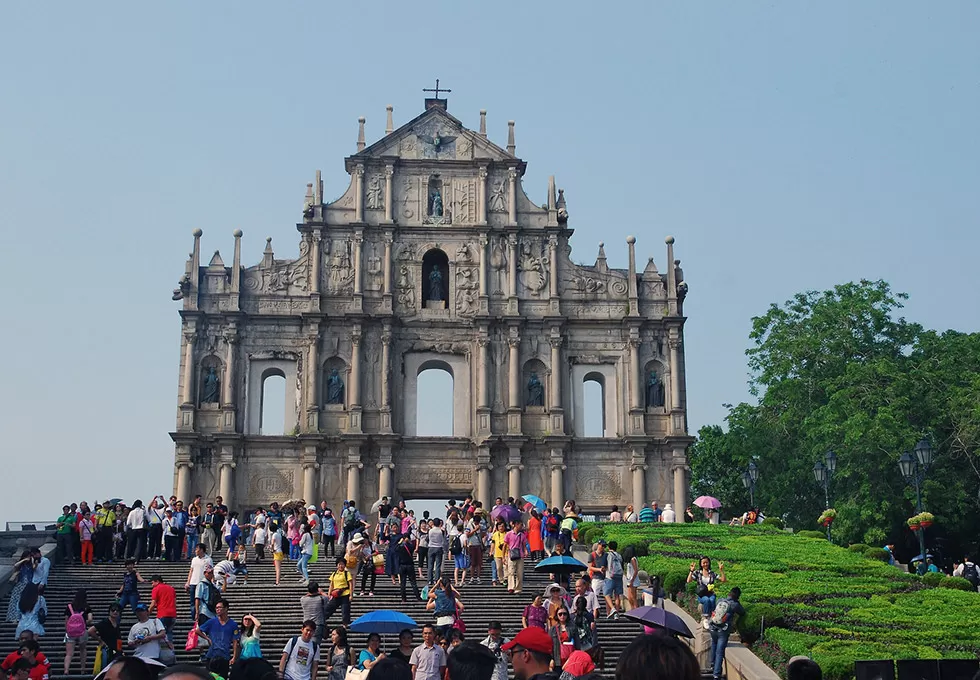
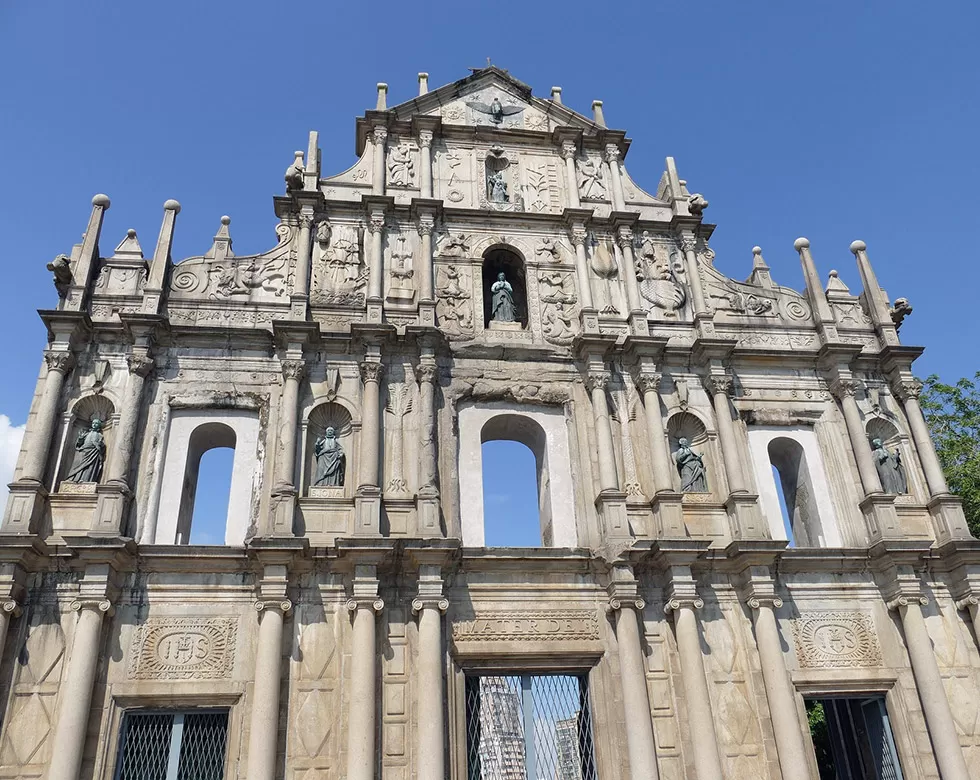
Macau boasts a rich and diverse cultural heritage. At its heart lies the Historic Centre of Macau, the core heritage area that preserves the oldest, largest, and most complete collection of Sino-Western architectural streetscapes in China. This area brings together 22 historic buildings and 8 public squares, including landmarks such as A-Ma Temple, Ruins of St. Paul's, Mandarin's House, and St. Lawrence's Church.
Macau is also home to a wide range of intangible cultural heritage. These include Cantonese opera, traditional herbal tea preparation techniques, Macanese deity sculpture craftsmanship, Taoist ritual music in shadow puppetry, and the narrative singing art of Nanyin. Folk traditions such as the A-Ma belief system and the Drunken Dragon Festival reflect the spiritual life of fishermen and trade guilds.
In addition, Macanese cuisine and festive customs form an essential part of the city’s cultural identity. Together, these tangible and intangible elements create a unique and captivating cultural landscape that defines Macau’s enduring charm.
Customize Your Authentic Macau Tour

If you are interested in the Macau itineraries mentioned above, please contact us, and we will be happy to customize it and provide a quote tailored to your preferences.
Alternatively, if you would like to customize your Macau Tour, please visit our Macau Tour Customized Center. We assure you that you will receive a reply within 24 working hours.
Informative Articles for Your Macua Trip
 Macau Fisherman's Wharf
- Travel Guide: attractions, weather, hotels, food, etc.
- Weather: best time and seasons to visit Macau
- Top attractions: well-selected top attractions in Macau
- Local culture: brief history, folk culture, festivals, etc.
- Top destinations: best places to visit in Macau
- Travel itineraries: itineraries for your reference
- Abundant activities: Macau cultural immersions
- Unique perspective: top interesting things to do
- Local food: what to eat while traveling in Macau
- Luxury hotels: accommodation to stay in Macau
- Macau Tours: customized tours for your reference

GREAT FAMILY CHINA TOUR
JULY 2024 We wanted to thank Grace at China Culture tour for organizing a great tour of China. We enjoyed our Beijing - Xian-Chengdu -Guilin -Yangshuo - Shanghai trip. Our local guides Bruce in Beijing, Susan in Xian, Jane in Chengdu, Mike in Guilin and Mary in Shanghai took care of us…read more details »
Teng Han L from SINGAPORE
Ready to Create a Unique Dream Travel?